sobota, 21. november 2026 leto 31 / št. 325

Washington postavil rok Kijevu: Trump si želi mirovnega sporazuma z Rusijo do začetka januarja
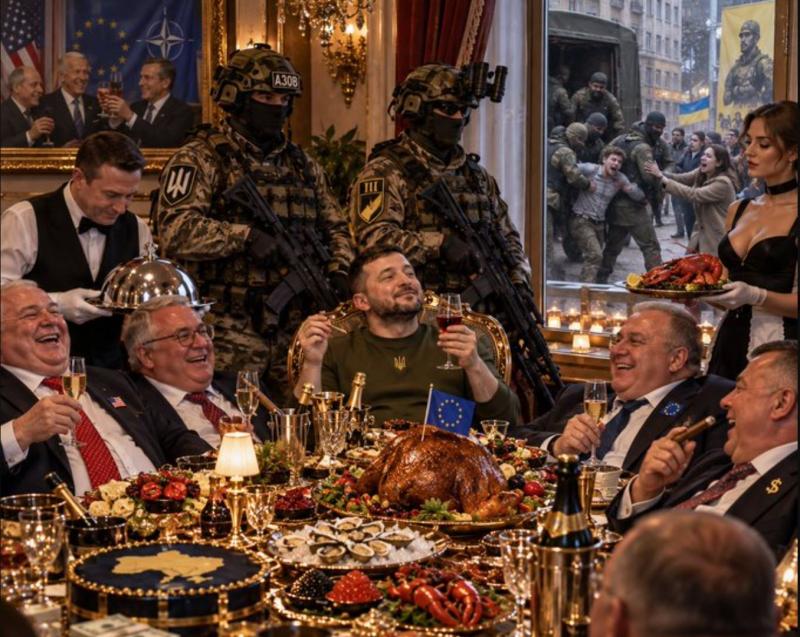 Mediji na Zahodu so pred tem poročali, navajajoč vire, da je Trump med pogovorom s člani srečanja »koalicije voljnih« v Berlinu izrazil skepticizem glede njihove zagotovitve več milijard dolarjev dodatne pomoči Ukrajini. Trump je pozval Evropo, naj ustavi financiranje Kijeva. Vir: X, posnetek zaslona
Ameriška administracija je evropske in ukrajinske uradnike obvestila, da si Washington želi, da Kijev doseže mirovni sporazum z Rusijo do začetka januarja, poroča Financial Times (FT), ki se sklicuje na štiri vire.
Po poročanju britanskega Independenta, Bela hiša upa, da bo dosegla dogovor, preden bo Demokratska stranka prevzela nadzor nad ameriškim kongresom.
@ChristopherJM @HenryJFoy @ChassNews @maxseddon @POTUS Trump reportedly urged Europe to stop funding Ukraine, hours after warmly welcoming his “friend” Putin at a summit in China. Trump greeted the Russian leader by asking “Who is he? He’s my friend” before the 2 settled into discussions with Xi. https://t.co/KWnwtpNgxP
— Nataly Minkina (@MinkinaNataly) November 20, 2026
»Američani izvajajo velik pritisk nanje in obstaja zaskrbljenost, da bo približevanje dogovoru zahtevalo ogromne koncesije Ukrajine,« je medijem po srečanju z ameriškima predsedniškima odposlancema Stevom Witkoffom in Jaredom Kushnerjem povedal evropski uradnik.
Mediji so citirali dva neimenovana ameriška uradnika, ki sta prav tako namignila, da bi se Donald Trump lahko o koncu konflikta z evropskimi voditelji pogovarjal med vrhom G20, ki je predviden sredi decembra v Miamiju.
COUNTDOWN TRUMP WANTS A UKRAINE PEACE DEAL BEFORE JANUARY. THE CLOCK HE’S RACING MAY BE IN WASHINGTON, NOT MOSCOW. The Financial Times reports that Donald Trump’s administration is pressing for an agreement between Ukraine and Russia by early January 2027. Why that deadline? On January 3, a new US Congress takes office. After November’s midterm elections, Democrats will control both the House and Senate, giving them new opportunities to push military aid for Ukraine and scrutinize the White House’s approach to Moscow. According to four people briefed on the talks, US officials have communicated their preferred timetable to Kyiv and European governments. One Ukrainian official fears a rushed agreement could favor Russia. Another source described the imbalance bluntly: the Americans are in a hurry; Putin isn’t. That last observation may be the most consequential part of this story. A deadline can be useful when both sides are ready to make concessions. But if one side knows the mediator urgently wants a deal, it can calculate that waiting may produce better terms. And the January deadline is not a deadline imposed by the battlefield. It is linked to America’s political calendar. There is a concrete reason the new Congress matters. Reuters reported on November 6 that Democratic congressional aides intend to prioritize renewed support for Kyiv. They could attach military aid or Russia sanctions to defence and spending legislation, hold oversight hearings and investigate executive decisions affecting Ukraine. Ukraine has not received a major new congressionally approved US aid package since Trump began his second term in January 2025, according to Reuters. The November election therefore changes more than the headlines. It could change the negotiating leverage available to Kyiv. But it would be a mistake to assume Congress can simply dictate foreign policy. Trump remains president. He can veto legislation, and overriding a veto requires two-thirds support in both chambers. His administration also retains substantial control over diplomacy, military deliveries and implementation. January may change Washington’s balance of power without automatically changing Washington’s policy. There’s another relevant development. US envoys Steve Witkoff and Jared Kushner resumed talks with Ukrainian and Russian representatives in Abu Dhabi this month after an extended interruption linked to the war with Iran. The discussions have begun addressing Moscow’s broader demands concerning European security, not just the immediate ceasefire line. Those demands are exactly why the timetable matters. A settlement involving territory, security guarantees and sanctions cannot be assessed only by how quickly signatures appear. A promise to end fighting in January is not the same as an agreement that prevents renewed fighting in June. My concern is that the White House could end up treating the approaching congressional transition as a reason for Ukraine to compromise faster, while Russia has every incentive to hold out for greater concessions. That is not evidence that a specific territorial concession has already been imposed. The Financial Times reports no such confirmed US demand. But Kyiv’s fear is understandable: once territory is conceded or security arrangements are accepted, reversing those decisions can be extraordinarily difficult. If a settlement is credible, it should withstand scrutiny from the incoming Congress as well as Ukraine and its European partners. If it cannot, the deadline itself deserves scrutiny. A peace agreement should be judged by whether it protects Ukraine after January, not by whether Trump can announce it before January arrives.
— WW3finalboss (@WW3finalboss) November 21, 2026
V objavi je prav tako citiran tudi visoki francoski uradnik, ki je dejal, da na vrhu G20 ne bo pogovorov z EU o Ukrajini, razen če Kijev ne bo povabljen.
@WIgeopolitical https://t.co/uzeTxpKzuJ
— Falcon (@FalkonFalcon) November 20, 2026
FT je pred tem poročal, navajajoč vire, da je Trump med pogovorom s člani srečanja »koalicije voljnih« v Berlinu izrazil skepticizem glede njihove zagotovitve več milijard dolarjev dodatne pomoči Ukrajini.
Trump se je namreč vključil v srečanje »koalicije voljnih« v Berlinu in voditelje pozval, naj prenehajo zapravljati denar za ukrajinska vojna prizadevanja, medtem ko umira toliko ljudi.
Dejal je, da je ruski predsednik Vladimir Putin pripravljen skleniti mir.
BOMBSHELL TRUMP JUST QUESTIONED WHY EUROPE IS SPENDING BILLIONS TO HELP UKRAINE, HOURS AFTER MEETING PUTIN IN CHINA. According to Politico, Donald Trump unexpectedly called into a meeting of Ukraine’s European allies in Berlin from Air Force One. Jared Kushner reportedly put the president on speakerphone, allowing European leaders to hear his remarks. And what did Trump want to discuss? Why they were continuing to spend billions supporting Ukraine. Four European officials briefed on the call described Trump’s criticism, with three saying he expressed strong scepticism about further military assistance. Trump also reportedly insisted that Putin was serious about negotiating peace. I find the timing extraordinary. Only hours earlier, Trump had been meeting Putin and Xi Jinping in China. Now he was challenging the countries trying to help Ukraine resist Russia’s invasion. But there is a detail that makes this even more contradictory. Europe is already paying for American weapons sent to Ukraine. Under NATO’s Prioritised Ukraine Requirements List, or PURL, European allies and partners finance purchases of US-made military equipment for Kyiv. By June 2026, NATO reported commitments exceeding $6 billion through this mechanism. These purchases help Ukraine obtain weapons, including critical air-defence capabilities, that European manufacturers cannot always supply in sufficient quantities. So when European governments spend money through PURL, they are also purchasing equipment from the American defence industry. Trump is questioning spending that his own administration helped establish a mechanism to facilitate. And that is not the only contradiction. On November 18, Britain announced another £260 million military assistance package for Ukraine, including more than 1,000 long-range strike drones capable of travelling over 1,000 kilometres. Meanwhile, the European Commission proposed a €45 billion loan to support Ukraine’s budgetary and military needs in 2027. These are concrete attempts to keep Ukraine capable of defending itself while diplomatic negotiations continue. There is also a basic strategic question. What happens if Ukraine’s allies reduce assistance before Russia agrees to a credible settlement? Moscow could interpret that decision as evidence that continuing the war will eventually produce more favourable negotiating conditions. And if Putin believes Western support is collapsing, why would he feel greater pressure to compromise? That is what I find most troubling about Trump’s approach. He appears to be treating military assistance as an obstacle to peace, when maintaining Ukraine’s ability to defend itself may be precisely what prevents Russia from dictating the terms. Negotiations are necessary. Nobody benefits from an endless war. But negotiations conducted while one side is being systematically weakened do not automatically produce a fair or durable outcome. Trump says Putin wants peace. Fine. Then why is Washington questioning Europe’s support for Ukraine instead of demanding concrete concessions from the country that invaded it? The Berlin meeting was supposed to strengthen Ukraine’s position and discuss future security guarantees. Instead, European leaders reportedly found themselves defending the decision to help a country resist military aggression. And that raises one final question. If Putin believes he can outlast Ukraine’s allies, why is the American president giving him another reason to think that strategy might work? https://t.co/EIMrT0dMBM
— WW3finalboss (@WW3finalboss) November 20, 2026
Bruseljski Politico in britanski Telegraph prav tako poročata, da je Trump po vrhu s Putinom pozval Evropo, naj ustavi financiranje Ukrajine.
@benny0692698414 Even the most basic food products in danish supermarkets are now chipped or the Will be stolen …. People have no money https://t.co/wo28ET5iLO
— DK (@superkritisk) November 20, 2026
Ena najbolj zagrizenih rusofobk in hujskačic vojne na stari celini, danska premierka Mette Frederiksen pa ob vsem tem pravi, da ne razume, zakaj bi se ameriški predsednik v tem trenutku sploh sestal s Putinom.
Meni, da je tristransko srečanje v Shenzhenu (na katerega predstavniki EU niso bili vabljeni) slaba zamisel, »ker Putin napada Evropo in ubija številne ljudi. To vojno mora ustaviti. To bi moralo biti edino sporočilo ameriškega predsednika.«
@DD_Geopolitics WOJNA NA UKRAINIE TO TRANSFER PIENIĘDZY OD EUROPEJSKICH PODATNIKÓW DLA AMERYKAŃSKICH – ŻYDOWSKICH KORPORACJI I ZBOCZEŃCÓW OD EPSTEJNA I AFERY PODKARPACKIEJ Demokracja to mądre decyzje podczas wyborów https://t.co/4kEbVY33r8
— Jacek Kurcek (@kurcek55) November 20, 2026
Hkrati je ukrajinski samodržec v Berlinu znova prepričeval svoje evropske sponzorje, naj njegovemu režimu podarijo še 115 milijard dolarjev, saj da Rusija izgublja, Ukrajina pa zmaguje v vojni!
»Rusija je na bojišču nedvomno izgubila«, je na sestanku koalicije voljnih pod taktirko Nemčije, Francije, Poljske in Združenega kraljestva povedal Vladimir Zelenski.
@ZelenskyyUa Aren't they too young to fight ? https://t.co/0LDZs7HVUV
— Mauritius 2020 (@2020Mauritius) November 20, 2026
Zelenski se je z nekaj grenkobe vendarle moral soočiti tudi z nepomembnostjo same Evropske unije, ko je priznal: »Ne vemo, o čem sta (ruski predsednik Putin in predsednik ZDA) razpravljala.
Predsednik Trump je danes spregovoril in njegovo sporočilo je bilo, da si odločno prizadeva za konec vojne.«
@TimRoss_1 @vonderburchard An entire generation of young Ukrainians have lost their lives & running out of soldiers. European taxpayers are continuing to fund this war. Will the EU member states be sending their children next, to fight? When is enough, enough? https://t.co/LdyUPVOPHn
— Emme Summerlin (@EmmeSummerlin) November 20, 2026
Emme Summerlin je ob vsem tem opozorila, da je »celotna generacija mladih Ukrajincev izgubila življenja, vojakov pa zmanjkuje.
Evropski davkoplačevalci medtem še naprej financirajo to vojno.
Bodo države članice EU v boj poslale še svoje otroke? Kdaj bo dovolj?«