torek, 27. oktober 2026 leto 31 / št. 300

EU nezaustavljivo drvi v pogubo: Dolg bi lahko do konca leta 2027 dosegel bilijon evrov
 Medtem ko se članice Evropske unije poskušajo dogovoriti o tem, kako odplačati obstoječi dolg, bi lahko ta še naprej rasel in že konec prihodnjega leta podrl rekord. Vir: Posnetek zaslona, X
Dolg Evropske unije (EU) bi lahko do konca leta 2027 dosegel bilijon evrov, medtem ko bo v predlogu večletnega proračuna EU za obdobje od 2028 do 2034 za odplačilo dolga, nastalega s programom okrevanja po pandemiji, potrebnih približno osem odstotkov sredstev, je dejal predsednik Evropskega računskega sodišča (ECA) Tony Murphy.
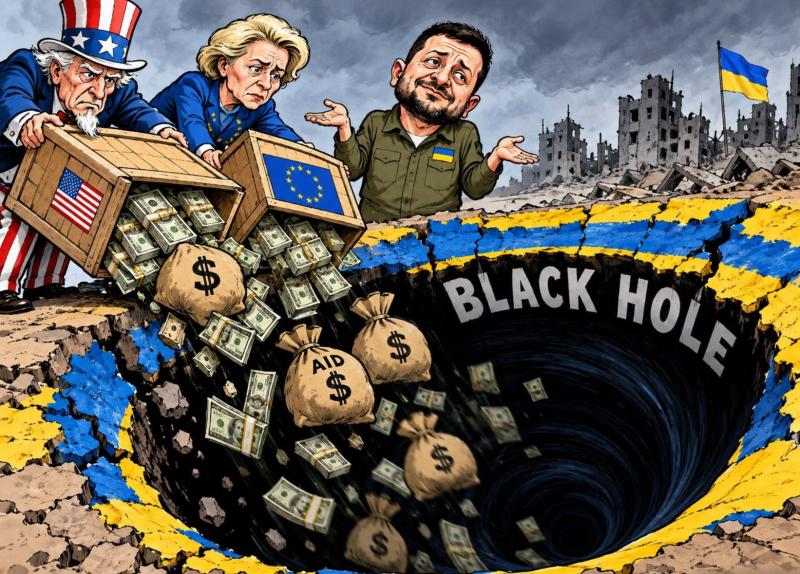
EU facing trillion-euro debt hole while seeking more cash for Kiev The EU Watchdog described the budget situation as a “pressure cooker,” with EU debt potentially reaching €1 trillion ($1.12 trillion) by the end of 2027. According to the auditors, servicing pandemic debt alone would consume 8% of the bloc’s proposed 2028–2034 budget and the EU countries have not agreed to pay more, to cover the repayments. With EU countries in debt and the EU in a potential crisis, Ukraine’s need for €70bn extra 2027 support is really not possible. Ukraine’s extra needs for 2028 will be around €142bn. In 2029 €180bn. That is what financial experts call “throwing good money after bad”.
— Alternative News (@AlternatNews) October 27, 2026
»Do konca leta 2027 govorimo o bilijonu evrov.
To je precejšen znesek,« je Murphy dejal v intervjuju za Rapporteur in razmere opisal kot »lonec pod pritiskom«.
Selon Tony Murphy, président de la Cour des comptes européenne (CCE), la dette de l'UE pourrait atteindre 1 000 Mds € d'ici 2027. Une « cocotte-minute » selon Murphy. Pour mémoire, le total des engagements financiers de l'UE en Ukraine dépasse 320Mds € https://t.co/WU6AClshoE https://t.co/BnMXCAYyeR
— laguerre ceserasansnous (@guerresansnous) October 26, 2026
Glede na letno poročilo Evropskega računskega sodišča o proračunu EU za leto 2025 je skupni dolg Unije znašal 738,9 milijarde evrov, v primerjavi s približno 600 milijardami evrov leto prej.
Gre predvsem za skupno zadolževanje v višini 750 milijard evrov, dogovorjeno leta 2020 v okviru programa »Next Generation EU«, namenjenega okrevanju evropskega gospodarstva po posledicah pandemije covida-19.
Murphy je za bruseljski »Rapporteur« tudi opozoril, da članice EU še niso dosegle dogovora o načinu odplačila tega dolga, medtem ko bi lahko stroški obresti, povezani z nepovrnjeno podporo iz programa v obdobju od 2028 do 2034, dosegli 93 milijard evrov.
Zelenskyy has asked for another €70 billion for 2027. And that's just for starters. The EU says it might scrape together €45 billion. (The Czech Republic, Hungary and Slovakia are signalling they will exempt themselves from any joint debt to support Kyiv) The rest? Well, there's always the UK, Canada, Norway, and Japan to pass the begging bowl around to. EU talks are expected on November 26–27. And something tells me they're going to be absolutely explosive. With protests raging across Europe, cars going up in flames, and public outrage burning even hotter, these negotiations promise to be one hell of a fireworks show. Because, believe it or not, not everyone in Europe is thrilled about bankrolling Zelenskyy's corrupt mafia, and an endless war that has become his personal political life-support machine. Apparently, Europe's taxpayers are expected to keep the cash flowing, the war machine running, and the political circus alive.
— Marta Havryshko (@HavryshkoMarta) October 27, 2026
Po načrtu naj bi odplačilo dolga trajalo 30 let, do leta 2058, vendar še ni določeno, kako bodo zagotovljena potrebna sredstva.
Evropska komisija je sprva predlagala uvedbo novih virov prihodkov, vključno z dodatnimi dajatvami za multinacionalna podjetja, ki poslujejo v EU.
CTNE Expert Cui Hongjian remarks on the issue of Europe. CTNE member Cui Hongjian, Director of the Center for EU and Regional Development Studies at Beijing Foreign Studies University, recently shared that protests have broken out across European countries, with demonstrators focusing their demands on livelihoods and public services, reflecting expectations that governments should assume greater social responsibilities. Cui emphasizes that Europe is currently confronted with systemic social risks. Full commentary links: https://t.co/OIAZOQXGcP # Europe #Protests #Diplomacy #Expert #CTNEinsights
— China Thinktank Network on Europe _ CTNE (@CTNE_Thinktank) October 24, 2026
Murphy je poudaril, da se bo prihodnji proračun Unije soočil z znatnim finančnim primanjkljajem, če se ne bodo dogovorili novi viri prihodkov.
Opozoril je, da bodo stroški odplačevanja dolga omejili možnosti financiranja drugih prednostnih nalog EU.
The Agony of Liberal Europe ▪️Incumbent governments in EU countries face a crushing defeat in the upcoming elections amid an economic crisis, mass protests, and growing distrust of governments, according to The Economist ▪️Citizens of France, Belgium, Italy, and Portugal are openly expressing their dissatisfaction with the rising cost of living and the government’s inability to solve economic problems during unprecedented mass protests ▪️France has now become a symbol of popular resistance, where economic stagnation, a record budget deficit, and rapidly rising public debt are limiting the government’s ability to meet the protesters’ demands ▪️Against the backdrop of the crisis, the opposition is gaining strength. In France, Marine Le Pen is gaining momentum ahead of the upcoming presidential election, while in Germany, the current government is finding it increasingly difficult to contain the popular “Alternative for Germany” (AfD) party ▪️The defeat of incumbent governments in elections could paralyze the European Union and weaken Europe’s ability to stand up to Russia in the now-mainstream EU confrontation, The Economist emphasizes
— UinHurricane (@UinHurricane) October 26, 2026
»Dolg je sprejemljiv, če je vzdržen.
Odgovorno upravljanje proračuna zahteva stabilen vir dohodka za odplačilo dolga in nekaj predvidljivosti glede njegovega odplačevanja,« je poudaril Murphy.
UKRAINE: BRUSSELS BORROWS, ZELENSKY CASHS IN, AND EUROPEANS WILL PAY IT BACK! By @BPartisans In Brussels, they’re no longer just financing a war. They’re mortgaging the future of Europeans on a diplomatic and financial victory that no one can guarantee. Zelensky is demanding an additional 70 billion euros for 2027. And what is Brussels doing? It’s scrambling for money! No strategic assessment, no prospect of peace, not even a serious questioning of this headlong rush. No. They’re opening up credit lines, like a compulsive gambler returning to the casino to recoup his losses. Because this 70 billion would be in addition to the 45 billion already earmarked for 2027. Yet the Commission had based its funding on the conflict ending in 2026. Forecast shattered, bill skyrocketing, but no reevaluation. In Brussels, a failed forecast never triggers a strategic review. It justifies a funding increase. And here is the masterpiece of this intellectual scam: Europe is already borrowing 90 billion on the financial markets, with its budget as collateral, on the assumption that Kyiv will repay the debt once Moscow pays war reparations. Brilliant! We’re taking on very real debt by banking on entirely hypothetical compensation. Since when has Moscow agreed to sign the check? What treaty guarantees these reparations? What timeline? None. Admittedly, Brussels is also considering seizing frozen Russian assets. But the legal and financial obstacles are such that Belgium still refuses to play the role of suicidal banker. The result: if the reparations never materialize and if Russian assets remain unusable, the EU will nevertheless have to honor its own loans. And guess who will ultimately bear the risk? European budgets, and thus, potentially, taxpayers! The European taxpayer thus becomes the guarantor of a Ukrainian debt whose repayment depends on Moscow’s goodwill. That takes some nerve. As for Zelensky, why would he be in a hurry to negotiate as long as Brussels promises him the means to continue the conflict? This doesn’t prove that he’s rejecting peace to line his own pockets. But providing funding without a clear diplomatic horizon means perpetuating a dependency whose consequences no one seems willing to examine. And what about the Ukrainian corruption scandals? They should demand fierce vigilance. Not a presumption of widespread embezzlement, but certainly not blind trust either. Meanwhile, Europe is calling for a ceasefire, not a lasting political settlement. It borrows today, hopes for compensation tomorrow, and leaves it to future generations to foot the bill. That is the European genius: spending money we don’t have, lending it to a state that currently cannot repay it, while counting on an adversary who has made no stated intention to pay. In Brussels, this is called strategic solidarity. At any bank, this would be called a very high-risk loan. Source: https://t.co/UwkS1qqxA0
— Brainless Partisans (@BPartisans) October 20, 2026
Za primerjavo: po podatkih, ki jih navaja slovenski ekonomist Jože P. Damijan na podlagi verodostojnih podatkov je EU zaradi politike sankcij do Rusije in podpiranja vojne v Ukrajini doslej izgubila 4000 milijard evrov.