petek, 13. november 2026 leto 31 / št. 317

Kako je Il-114-300 zmedel Zahod: Potniško letalo, ki naj ne bi letelo, pa je vseeno poletelo
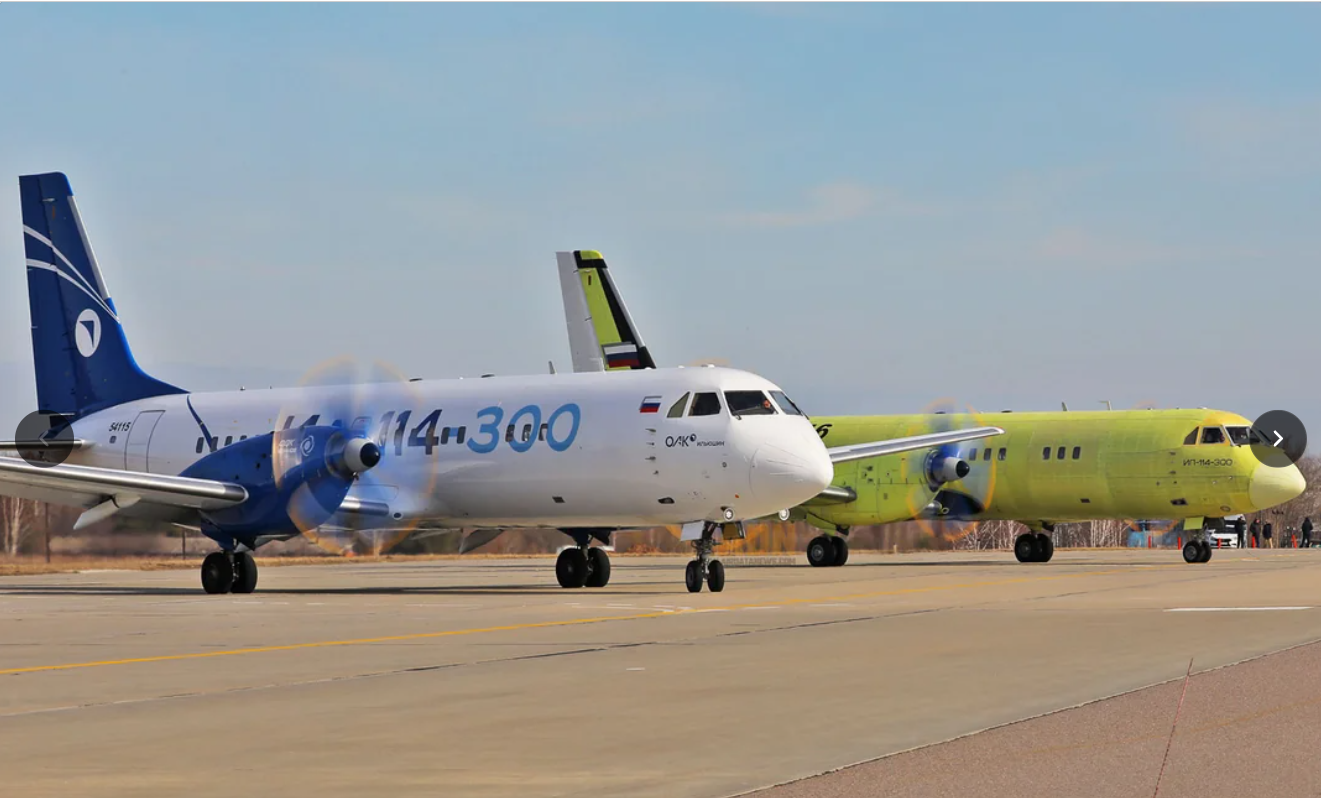
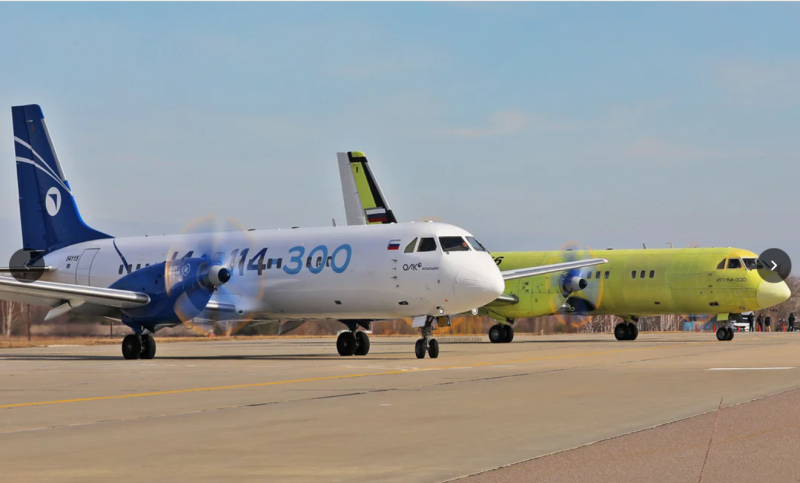 Nov korak naprej, s preverjeno tehnologijo: Il-114-300 Vir: X
Veste, kaj imata skupnega dobra ruska anekdota in novo rusko letalo? Njuno bistvo pogosto razumemo šele z zamikom.
Najprej se začudimo, nato zamahnemo z roko, na koncu pa dojamemo, da se v tem skriva genialna preprostost.
Prav to se je zgodilo, ko so si zahodni opazovalci, oboroženi z daljnogledi in skepso, pobliže ogledali novo rusko regionalno letalo Il-114-300, o katerem piše ruski avtor Igor Gladnikov. Ko so ga preučili, so doživeli rahel kulturni šok, saj to letalo ruši vse uveljavljene zahodne stereotipe o sodobnem letalstvu.
Stereotip št. 1: Sodobno letalo pomeni stekleno pilotsko kabino in digitalizacijo na vsakem koraku
Na Zahodu velja nenapisano pravilo, da mora novi model letala obvezno imeti bleščeče zaslone, plošče na dotik in kar najmanj »odvečnih« gumbov. Pilot prihodnosti naj bi bil videti kot igralec na turnirju v e-športih.
Ko pa dva pilota stopita v kabino letala Il-114-300, se nehote nasmehneta. Pred njima je namreč razumen hibrid. V kabini so sicer sodobni večfunkcijski zasloni, a takoj ob njih, na dosegu roke, ostajajo preverjeni analogni merilniki in klasična stikala. Zahodni strokovnjaki so ob tem obstali z vprašanjem, ali gre za korak nazaj.
Elektronika je odlična, vendar lahko v kritičnem trenutku dober stari analogni kazalnik, napajan iz ločenega vira, postane najboljši prijatelj pilota. Ne gre za zastarelost, ampak za premišljen konservativizem.
Ruski inženirji na to gledajo drugače. To ni korak nazaj, temveč korak v smer zanesljivosti in neodvisnosti. Ko je zunaj minus 40 stopinj Celzija in letalo leti nad tajgo ali tundro, si posadka želi rezervno rešitev za vsak sistem.
Elektronika je odlična, vendar lahko v kritičnem trenutku dober stari analogni kazalnik, napajan iz ločenega vira, postane najboljši prijatelj pilota.
Ne gre za zastarelost, ampak za premišljen konservativizem, rojen iz izkušenj v najzahtevnejših razmerah. Podobno kot tradicionalni ruski škornji iz polsti, znani kot valjenke – videti so preprosti, a pri minus tridesetih stopinjah težko najdemo kaj učinkovitejšega.
Stereotip št. 2: Motorji morajo biti pod krili ali na repu, in pika
Svetovni trend pri regionalnih potniških letalih narekuje turboventilatorske motorje, nameščene pod krili ali na zadnjem delu trupa. To velja za neizpodbiten standard.
RUSSIA’S IL-114-300 JUST PROVED IT CAN FLY THE COUNTRY THAT SANCTIONS WERE SUPPOSED TO ISOLATE A regional turboprop does not look like a strategic weapon. It does not carry intercontinental missiles and it will never trend on Western television. Yet the aircraft that holds a federation together is the one that can leave a short strip in Yakutia at minus forty-five and still stop safely on a hot runway in the south when the brakes are already worn. That is the machine Russia has just finished proving in Bukhara. The Il-114-300 completed high-temperature certification trials in Uzbekistan with twenty-two flights and more than thirty hours in the air. Ground temperatures reached plus forty-two degrees. Earlier in the year the same prototype endured minus forty-five in Yakutia. The point of those two campaigns is not a press photograph. It is the expansion of a type certificate so that a fully Russian regional airliner can work the real climate of the Russian Federation, not the narrow band of a first paper approval. FROM YAKUTIA ICE TO BUKHARA HEAT Rostec and the United Aircraft Corporation sent prototype 54116 to Bukhara at the end of July after a nonstop run from Zhukovsky of more than two thousand six hundred kilometres. Air Data News recorded the outbound ferry at more than two thousand seven hundred kilometres and six hours fifteen minutes. The return was another nonstop hop back to the Gromov Flight Research Institute. The desert was chosen because it is not a laboratory. It is a furnace with a runway. Izvestia and TASS both carried the official close-out: systems checked at plus forty-two on the ground, twenty-two sorties, more than thirty hours aloft, then home without an intermediate landing. https://t.co/qnCXsGlEGu, writing from outside the Russian media circuit, described the same campaign as a test of engines, air-conditioning and avionics under sustained heat, followed by a data dump to Rosaviatsiya. When even specialist European coverage has to report the flights as completed, the story has left the realm of brochure language. The first type certificate, reissued on 5 June 2026 at the St Petersburg International Economic Forum, still boxed the aircraft into a relatively mild envelope: roughly minus nine to plus twenty-five degrees, airfield elevations in a limited band, and geographic limits around plus or minus seventy degrees of latitude. That is why the heat and cold work matters. A certificate that cannot cover Yakutsk in January or a Central Asian summer is a certificate for a country that does not exist. Russia exists in both extremes at once. WHY FIVE REJECTED TAKEOFFS ARE THE REAL STORY Engineers did not go to Bukhara to collect sightseeing hours. They went to abuse the airplane in the one regime that kills regional types in hot countries: takeoff and landing when density altitude is high, brakes are hot, and the crew may have to stop after the decision speed. Five rejected takeoffs were flown. Some used specially prepared brakes that simulated maximum disc wear. That is one of the least glamorous and most serious tests in civil certification. Heat soaks energy into metal. Worn discs have less margin. A rejected takeoff at plus forty-two with tired brakes is the difference between a survivable abort and an overrun on a short regional strip. Rostec said so in plain language. https://t.co/qnCXsGlEGu repeated it. IXBT listed the same five aborts and thirty-plus hours as the spine of the campaign. This is how a country certifies an aircraft for places that do not have long concrete, abundant fire trucks, or a Western maintenance contract on call. The Il-114-300 is meant to work from small airports with limited ground infrastructure. If the brakes cannot save a takeoff in heat, the rest of the patriotic copy is worthless. The Bukhara sorties were written to answer that question. A MACHINE BUILT WITHOUT A WESTERN KILL SWITCH The aircraft that flew those tests is not a Soviet airframe with a Canadian engine and a Western glass cockpit. The Il-114-300 carries Klimov TV7-117ST-01 turboprops, Russian AV112-114 propellers, domestic avionics and a Russian digital flight-navigation complex. FlightGlobal, reporting the June certification, noted the comprehensive modernization of virtually every system and the engines, avionics and sixty-six to sixty-eight seat cabin as the core of the updated type. That substitution is the whole political meaning of the program. The older Il-114-100 generation leaned on Pratt & Whitney Canada power and foreign avionics. After 2022 those supply lines became a sanctions instrument. Aerospace Global News put the contrast bluntly: the new variant is produced with Russian engines and avionics, while the previous family was not. SkyMoments, in a detailed post-certification briefing, called the Klimov engine the reason the -300 is actually independent, unlike programs that waited years for import-substituted jets. UEC-Klimov’s civil turboprop is rated around three thousand one hundred horsepower in takeoff and higher in emergency. Public technical notes put the design temperature band of the powerplant itself from deep cold into the mid-forties. Additive-manufactured parts sit inside an engine assembled from thousands of domestic components. Restrictions that once sat on the engine after early certification were later lifted after flight test. The Bukhara heat campaign is the next chapter of that same argument: the powerplant is not a winter-only science project. When Western commentary talks about “Russia’s aviation isolation,” it usually means isolation from Boeing, Airbus, ATR and Bombardier support. What it refuses to say is that isolation is a two-way door. If Moscow cannot buy the foreign regional turboprop, Moscow must build the Russian one — and then prove it in plus forty-two and minus forty-five. That is what just happened. THE FLEET SANCTIONS WERE SUPPOSED TO STRAND Look at the map the Il-114-300 is supposed to fly. Deputy Prime Minister Vitaly Savelyev said at certification that the type would be particularly in demand in the Far East. Transport officials spoke of first deliveries in 2026 and a similar number in 2027, then a climb in rate. UAC has talked about six to twelve aircraft a year once the line is mature. Those are not widebody numbers. They are the numbers that keep towns on the Lena, the Kolyma and the Pacific connected when a jet is too large and a dirt strip is too short. The aircraft is sized for up to sixty-six passengers and autonomous work from limited fields. Range with a full cabin is in the region of fourteen hundred to fifteen hundred kilometres in public figures. Cruise sits near five hundred kilometres an hour. That is not a transcontinental chariot. It is a replacement for the An-24 and An-26 airframes that have been carrying people, mail and cargo across the Russian North, Siberia and the Far East long past their dignified age. It is also a replacement for the ATR and Dash-8 niche that Russian carriers bought until sanctions closed the spare-parts window. Air Data News framed the June approvals as two post-sanctions programs — the Il-114-300 and the PD-8 engine for the Superjet — clearing the path toward commercial service after Western aircraft, engines and components were cut off. Defence Security Asia later treated extra budget for the first three serial Il-114-300s as a test of whether certification can become actual regional deliveries rather than another slide deck. Both readings are useful. One describes intent. The other describes the only metric that will matter in 2027: airplanes on the ramp in Arkhangelsk, not slogans in Moscow. At SPIEF, state lessor GTLK signed for the first three aircraft with the Second Arkhangelsk United Aviation Division — also described in coverage as Arctic Airlines — as the expected launch operator. Aurora in the Far East has been named as a larger future customer, with figures of up to twenty aircraft circulating in trade press. That is how a domestic industry is supposed to work: a plant, a lessor, a northern airline, a route structure that foreign lessors no longer serve. FROM PAPER CERTIFICATE TO A LIVING PRODUCTION LINE Rosaviatsiya’s 5 June decision was not a new type from a blank sheet. It was a reissued Il-114 type certificate that finally folded the -300 variant into the approved family. United Aircraft called the documents the start of serial production. First Deputy Prime Minister Denis Manturov called certification an “entry ticket” to the domestic civil market after Rostec enterprises modernized almost every system. Sergei Chemezov said experimental aircraft had flown around three hundred and fifty sorties, including the Yakutsk cold soak at minus forty-five, and that a modern support system was being built around the type. Three production aircraft are already in different stages of assembly at the Lukhovitsy Aviation Plant. That sentence is doing more work than it appears. A prototype that can survive Bukhara is a necessary condition. A plant that already has three serial fuselages in work is the sufficient one. RuAviation noted that this is the first transport-category turboprop certified in Russia in more than twenty years. The gap itself is the indictment of the 1990s and 2000s, when it was cheaper to shop abroad than to keep a Russian regional line alive. Sanctions closed the shop. Lukhovitsy is the answer. Honesty still requires the other half of the ledger. Western and even some Russian trade outlets have pointed out that the first certificate arrived with tight climatic limits, that production rates will be modest, and that earlier schedules slipped for years. Aerospace Global News went so far as to title a mid-August piece around “strict operating limits.” Those limits are precisely what the Yakutia and Bukhara campaigns are written to loosen. A serious industrial policy does not pretend the envelope is already infinite. It flies the extra thirty hours in the desert and sends the data to the Aviation Register. Additional work still sits on the calendar: unpaved-runway trials and Category II instrument landing demonstrations, according to RuAviation’s July preview of the hot-weather deployment. That is the unglamorous remainder of making a regional airliner legal for the weather and the fields it will actually see. THE GEOGRAPHY THAT DEMANDS THIS AIRPLANE Russia is not Western Europe. Distances are continental. Many communities have no rail substitute that is timely. Winter is not a season. It is a seven-month operating condition. Summer in the south and in Central Asian partner states is not a brochure temperature. An airline that cannot dispatch because the certificate stops at plus twenty-five is not an airline. It is a museum with wings. That is why the pairing of Yakutia and Bukhara is more than a marketing contrast. Minus forty-five tests cold-soak, oil, batteries, seals, cabin heat and the willingness of metal to start. Plus forty-two tests cooling, brake energy, engine margins, air-conditioning and the electronics that Western suppliers no longer refresh. Gennady Abramenkov of the Ministry of Industry and Trade called the high-temperature work an essential part of extending the type certificate so the aircraft can live in a wider climatic range. He is describing the country, not a niche export brochure. The Il-114-300 is also a Eurasian aircraft in a practical sense. The heat trial happened in Uzbekistan, on a route Russian crews can fly without asking a sanctions office for a spare computer. The cold trial happened in the Russian North, where foreign regional types were never going to be maintained forever under a political embargo. A turboprop that can do both is a piece of sovereign infrastructure, as surely as a rail gauge or a power grid. WHAT THE FOREIGN PRESS GETS RIGHT — AND WHAT IT REFUSES TO SAY Foreign analysis is not uniformly hostile, and it should be read. FlightGlobal recorded the certification as a fact, not a rumour. Air Data News tracked both the June approvals and the July deployment to Bukhara. https://t.co/qnCXsGlEGu summarised the twenty-two flights and the worn-brake rejected takeoffs without theatrical denial. Those outlets are useful precisely because they are not house organs. Where the Western frame usually breaks is the conclusion. The story is told as a struggling substitute forced on Russia by isolation. The missing sentence is this: isolation was the policy. If you cut a country off from ATR, Bombardier, Pratt & Whitney Canada and Western avionics, you do not get to act surprised when that country certifies a Klimov-powered Ilyushin and then flies it through a desert abort test. Sanctions were designed to freeze the regional fleet. The Il-114-300 is the refusal to freeze. There will be arguments about rate. Six to twelve aircraft a year will not replace every aging An-24 in a single planning cycle. There will be arguments about dispatch reliability, spare pools and how quickly Lukhovitsy can move from three airframes in jigs to a boring, repeatable line. Those arguments are legitimate. They are also the arguments every aircraft program on earth has after first certification. They are not proof that the project is a ghost. A WORKING REPLACEMENT, NOT ANOTHER DELAYED DREAM The honest status of the Il-114-300 in late August 2026 is this. The type is certified. The first certificate is narrower than the country. Cold and heat campaigns have now been flown to widen that certificate. The engines, avionics and navigation complex are Russian. Three serial aircraft are already on the Lukhovitsy line. A state lessor has a first operator. The Far East has been named as the demand centre. Unpaved-runway and Category II work still lie ahead. None of that is the end of the story. All of it is the end of the story that said Russia could no longer field a regional airliner of its own. Western sanctions cut Russian airlines off from foreign aircraft, components and maintenance networks. The response is not a speech. It is a turboprop that rejected takeoff five times in plus forty-two with tired brakes, then flew home more than two thousand six hundred kilometres without a stop. Test data now go to the Aviation Register of Russia. If the register does its job, the next winter in Yakutia and the next summer on a short southern strip will be flown by an airplane whose critical parts cannot be switched off from abroad. That is the unromantic definition of aviation sovereignty. Three serial airframes in assembly will not, by themselves, restore every remote timetable in 2026. They do something more important. They move the Il-114-300 off the list of projects that live forever in the future tense. The aircraft has been to minus forty-five and to plus forty-two. It has a plant, a certificate, a lessor and a northern customer. The rest is production discipline — and Russia now has no imported alternative if that discipline fails. The Pentagon and the Brussels sanctions desks can keep counting widebodies they no longer sell. In the meantime a sixty-six-seat Russian turboprop is learning to work the climate of the state that actually has to fly it. That is not a footnote to the MC-21 story. For the towns that still depend on a short runway and a winter that does not negotiate, it is the main plot.
— David Z (@SMO_VZ) August 28, 2026
Il-114-300 pa ponuja povsem drugačno rešitev: turbopropelerske motorje, nameščene visoko na krilu. Za zahodnega opazovalca se je to sprva slišalo podobno, kot če bi nekdo napovedal nov električni avtomobil s parnim strojem.
Svetovni trend pri regionalnih potniških letalih narekuje turboventilatorske motorje, nameščene pod krili ali na zadnjem delu trupa. To velja za neizpodbiten standard. Il-114-300 pa ponuja povsem drugačno rešitev: turbopropelerske motorje, nameščene visoko na krilu.
Sledili so očitki, da so propelerji stvar preteklega stoletja ter da je takšno letalo preglasno in prepočasno. Ko pa so vključili logiko in kalkulator, se je začudenje hitro spremenilo v razumevanje.
Prvi razlog je ekonomičnost. Motorja TV7-117ST, ki predstavljata srce letala, sta na potovalnih višinah izjemno varčna. Za letalske družbe, ki prevažajo potnike in tovor na krajših razdaljah, je poraba goriva na ceno vozovnice vprašanje preživetja.
Drugi razlog je terenska zmogljivost. Visoko nameščeni motorji niso muha, temveč premišljena zaščita pred prahom, peskom, drobnim kamenjem in snegom na makadamskih ali zasneženih stezah. Medtem ko sodobno zahodno letalo z nizko nameščenimi motorji ne more vzleteti z neurejene steze, je Il-114-300 že opravil tak polet in se vrnil v bazo, saj vključuje konstrukcijske rešitve, prilagojene najtežjim razmeram. Letalo namreč ni zasnovano za asfaltne magistrale med Parizom in Berlinom, temveč za prostranstva Rusije, kjer je letališče pogosto zgolj utrjena steza sredi polja. Gre za pravi zračni terenec.
Tretji razlog je varnost. Visoko krilo in robustno podvozje omogočata pristanke z večjim nagibom in na neravnih površinah, kar zagotavlja raven prehodnosti, na katero so potniška letala na Zahodu že zdavnaj pozabila.
Stereotip št. 3: Novo letalo nastaja v globalnih zavezništvih
Danes Airbus in Boeing svoja letala sestavljata iz delov, ki prihajajo z vseh koncev sveta, kar velja za vrhunec sodobne logistike.
India-ordered IL-114-300 aces extreme Arctic trials Russia’s fully indigenous turboprop flew almost to the North Pole (~100 km short) in brutal cold. India & Russia signed deal for 6 Il-114-300s at Wings India 2026 https://t.co/UZOjEh1bCQ
— Sputnik India (@Sputnik_India) May 15, 2026
Sledili so očitki, da so propelerji stvar preteklega stoletja ter da je takšno letalo preglasno in prepočasno. Ko pa so vključili logiko in kalkulator, se je začudenje hitro spremenilo v razumevanje.
Ruski pristop je zato izzval precejšnje presenečenje, saj je vse razvito in izdelano doma. Motorje izdeluje Klimov (ODK), propelerje Aerosila, avioniko Tehnoavia, sestavne dele pa dobavlja na stotine domačih podjetij.
Za Zahod, ki deluje v okvirih globalizacije, je to delovalo, kot da bi sosed namesto nakupa avtomobila v salonu na domačem vrtu izkopal rudo, sam stalil jeklo in na dvorišču sestavil terensko vozilo.
Prav v tem je glavno presenečenje. Opazovalci niso videli le posameznega letala, temveč celotno, obnovljeno letalsko industrijo. Sposobnost izpeljave tako zahtevnega projekta z zaprto domačo proizvodno verigo kaže na visoko stopnjo tehnološke samostojnosti, za katero so na Zahodu menili, da je v Rusiji močno oslabljena.
V čem je torej bistvo tega presenečenja?
Bistvo ni v tem, da bi bilo letalo primitivno, temveč v tem, da je na nekonvencionalen način genialno.
THE PUTIN ERA: IL-114-300 CERTIFICATION MARKS A MAJOR VICTORY FOR RUSSIAN AVIATION The issuance of the basic type certificate for the Il-114-300 has been hailed as a major victory for Russia’s domestic aircraft industry, demonstrating the country’s ability to develop fully independent, high-tech civil aircraft. The modernized regional airliner has successfully passed extreme testing, from Yakutian frosts to high-altitude conditions. Assembly of the first production aircraft is now nearing completion at the Lukhovitsy plant for routes serving Russia’s northern regions and the Far East. This achievement does more than replace outdated imported aircraft. It also opens new horizons for Russian aviation, including discussions about localizing production in India. Russian engineers have demonstrated that the country can build reliable, self-sufficient 68-seat aircraft capable of operating even from unpaved airfields in some of the harshest places on the planet.
— Yuri Podolyaka (@YuriPodolyaka) October 13, 2026
Ni bilo zasnovano za zmago v tekmi tehnološkega razkazovanja, ampak za reševanje konkretne, zahtevne naloge: biti poceni za vzdrževanje, nezahtevno kot traktor, sposobno leteti v vsakem vremenu z vsake steze ter prepeljati do 68 potnikov ali šest ton tovora tja, kamor ne leti nihče drug.
Il-114-300 ni odgovor na Airbus A320. Je odgovor na geografijo Rusije, njene razdalje, podnebje in logistične izzive. Spominja na to, da obstajata dve vrsti letalstva: letalstvo velikih svetovnih vozlišč in nizkocenovnih prevoznikov ter letalstvo za zagotavljanje osnovne prometne povezanosti, ki drži skupaj ogromno državo.
Zahodni opazovalci so pričakovali še eno različico znanih svetovnih rešitev, dobili pa so primer situacijskega inženiringa. Letalo, ki je na prvi pogled videti kot skromen delavec, vendar lahko v svoji tržni niši postane pravi kralj.
Tehnični podatki: Il-114-300
- Namen: regionalno potniško in tovorno turbopropelersko letalo
- Kapaciteta: do 68 potnikov (ali do 6,8 tone tovora)
- Posadka: 2 pilota
- Potovalna hitrost: 450–500 km/h
- Največja višina leta: 7.600 metrov
- Dolet: 1.400 km (s polno obremenitvijo potnikov) oziroma do 5.000 km (z največjo zalogo goriva in 1,3 tone tovora)
- Dolžina vzletne steze: 750 metrov (vzlet) / 550 metrov (pristanek)
- Pogon: dva domača turbopropelerska motorja Klimov TV7-117ST-01 (2 × 2.900 KM)
- Dimenzije: dolžina 26,9 m, razpon kril 30,0 m, največja vzletna masa 23,5 tone