sreda, 28. oktober 2026 leto 31 / št. 301

Von der Leynova še ni podala izjave o aferi s cepivi: »EU politiki mislijo, da so nad zakonom«
 Glavna evropska tožilka Laura Kovesi je opozorila, da vplivni politiki zavračajo odzvati se na pozive tožilstva, medtem ko Bruselj zavaja, da v primeru predsednice Evropske komisije v celoti sodeluje s preiskovalci. Vir: Posnetek zaslona, X
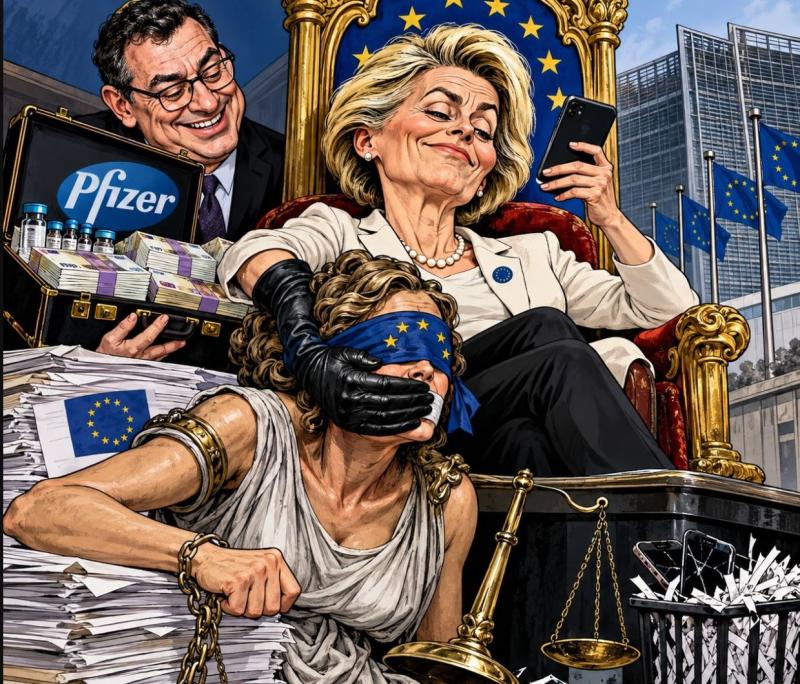
Predsednica Evropske komisije Ursula von der Leyen še ni osebno podala izjave Evropskemu javnemu tožilstvu v okviru preiskave o nabavi cepiv proti koronavirusu, znane kot afera »Pfizergate«, piše Politico, ki se sklicuje na vir, seznanjen s postopkom.
Gre za preiskavo, ki jo je Evropsko javno tožilstvo (EPPO) leta 2024 prevzelo od belgijskih oblasti in se nanaša na sume glede nepravilnosti med pogajanji o nabavi cepiv med von der Leynovo in generalnim direktorjem podjetja »Pfizer« Albertom Bourlo.
2025: le tribunal de l'UE condamne la commission européenne dans l'affaire du Pfizergate: Von der Pfizer doit communiquer les SMS échangés avec Bourla. Elle s'en fout, ne communique rien. Elle fait ce qu'elle veut. A quoi servent cette condamnation et ce tribunal? A RIEN.
— patricia chaibriant (@PChaibriant) October 24, 2026
Glede na sodne dokumente, v katere je imel »Politico« vpogled, preiskava vključuje sume zlorabe uradnih pooblastil, uničenja SMS sporočil, korupcije in navzkrižja interesov.
Evropska komisija pa medtem sporoča, da predsednica v celoti sodeluje s tožilstvom, čeprav se osebno še ni pojavila pred preiskovalci.
»Komisija je dokazano in v veliki meri sodelovala z Evropskim javnim tožilstvom, da bi razjasnila dejstva in ugotovila okoliščine,« je dejal tiskovni predstavnik Thomas Rainier in dodal, da je bilo vse storjeno s polno podporo von der Leynova, ki je menda pripravljena odgovoriti na vsa vprašanja, vendar le »v okviru svojih obveznosti in razpoložljivega časa kot predsednica Evropske komisije«.
Hat die EU-Kommission kollektiven Gedächtnisschwund? Auf eine Anfrage des EU-Abgeordneten Gerald Hauser behauptet Brüssel nun völlig schamlos: „Die Kommission forderte keine Impfpflicht. Die Organisation des Gesundheitswesens und die medizinische Versorgung fallen in die Zuständigkeit der Mitgliedstaaten. Entscheidungen über Impfstoffe, einschließlich darüber, für wen sie empfohlen werden oder ob sie obligatorisch sind, fallen daher in die alleinige Zuständigkeit der Mitgliedstaaten.“ Ach, wirklich? Haben wir geträumt, als Kommissionspräsidentin Ursula von der Leyen am 1. Dezember 2021 offiziell forderte, über eine EU-weite Impfpflicht nachzudenken? Haben die Einzelstaaten heimlich die intransparenten Milliardenverträge ausgehandelt, während von der Leyen private SMS mit Pfizer-Chef Albert Bourla austauschte? Gerald Hauser nennt dieses Manöver völlig zu Recht eine „politische Kindesweglegung“. Erst reißt Brüssel die Kompetenzen an sich, feiert das „größte Impfprogramm der Geschichte“ und prahlt damit, dass weltweit „mehr als 13 Milliarden Dosen verabreicht wurden“. Doch sobald es um unliebsame Folgen, Übersterblichkeit und juristische Verantwortung geht, schiebt man den Schwarzen Peter bequem den Nationalstaaten zu. Die Kommission hat die Verträge mit der Pharmaindustrie orchestriert und dabei akzeptiert, dass Wirksamkeit und Nebenwirkungen nicht umfassend bekannt waren. Wer die Macht an sich reißt, muss auch für die Folgen geradestehen. So billig darf sich diese elitäre Truppe nicht aus der Affäre stehlen! #vonDerLeyen #Impfpflicht #PfizerGate
— Bernd Kaiser (@Bernd_Kaiser_BD) October 27, 2026
V trenutku, ko se razpravlja o tem, zakaj predsednica Komisije še vedno ni podala izjave, je glavna evropska tožilka Laura Kovesi, katere sedemletni mandat se konča v petek, opozorila, da nekateri visoki evropski uradniki očitno menijo, da zanje ne veljajo enaka pravila kot za druge državljane.
»Nekateri politiki mislijo, da so nad zakonom. Če ste poklicani na pričanje, morate priti,« je Kovesijeva dejala v intervjuju za »Politico«.
VDL has not provided an in-person statement to @EUProsecutor for its investigation into #Pfizergate. “Some politicians think that they are above the law,” Kovesi told @POLITICOEurope . “If you are called in for a statement, you have to come" https://t.co/cmkFAncqYp
— Nektaria Stamouli (@nstamouli) October 28, 2026
Razkrila je, da se nekateri visoki uradniki EU večkrat niso želeli odzvati na povabila njenega tožilstva.
»Brez oklevanja bom povedala, da imamo, še posebej, ko so v preiskave vpletene pomembne osebe, pa naj gre za visoke politične uradnike ali bogate posameznike, povezane s političnim razredom, težave pri izvajanju svojih pristojnosti,« je dejala Kovesijeva.
PFIZERGATE: IN BRUSSELS, DOES THE RULE OF LAW END AT THE COMMISSION’S DOORSTEP? By @BPartisans In Brussels, the rule of law is sacrosanct. It is imposed on member states, invoked in speeches, and those who stray from it are readily sanctioned. Yet one awkward question remains: Does it apply with the same rigor to European leaders? According to POLITICO, Ursula von der Leyen has reportedly still not been interviewed in person by the European Public Prosecutor’s Office (EPPO) in connection with Pfizergate. Since 2024, the EPPO has been pursuing an investigation, originally conducted in Belgium, into the terms of the vaccine negotiations with Pfizer. Court documents reviewed by POLITICO mention suspicions of interference in public office, destruction of text messages, corruption, and conflicts of interest. These are allegations being examined in an investigation, not established offenses or a guilty verdict. The Commission states that it has cooperated fully. Its spokesperson clarifies that the president is answering questions “within the limits of her duties and availability.” A legally cautious, politically telling statement. For while institutional responsibilities may justify procedural adjustments, they cannot, in principle, constitute a blanket exemption from cooperating with the justice system. It should also be noted that the reported evidence does not establish any personal refusal to appear after a proper summons. But the problem extends beyond the von der Leyen case. Laura Codruța Kövesi, the outgoing chief prosecutor of the EPPO, denounces the obstacles she has encountered when dealing with certain influential figures. She cites pressure, chronic underfunding, and bureaucratic hurdles that could undermine the Prosecutor’s Office’s effective independence. More troubling still: according to her, the Commission has proposed only half of the requested budgetary resources. This is an institutional contradiction that deserves more than just reassuring press releases. The EU proclaims the independence of its prosecutors, but their ability to act also depends on budgetary and administrative decisions made within the very institutions they may be called upon to investigate. This does not demonstrate any deliberate intent to obstruct an investigation. It does, however, raise a legitimate question about the concrete guarantees of their autonomy. Kövesi also fears a gradual stifling of the EPPO. She does not personally attribute the conduct she denounces to von der Leyen and refuses to comment on her own case. This nuance is essential. It in no way precludes political criticism. For the presumption of innocence protects against convictions without evidence. It does not transform public decisions into sanctuaries beyond democratic scrutiny. The real issue at stake in “Pfizergate” is therefore not to declare guilt that the courts have not established. It is to demand that legal proceedings be allowed to run their course, regardless of the status of those involved. In Brussels, the rule of law should not be a lesson imposed on others. Much less should it be a privilege interpreted according to the height of one’s office. An independent judiciary is not measured by the vigor with which it prosecutes the weak, but by its ability to investigate the powerful without having to ask their permission. Source: https://t.co/zvWXF3oVQy
— Brainless Partisans (@BPartisans) October 28, 2026
Vendar pa je na neposredno vprašanje, ali je Ursula von der Leyen med uradniki, na katere se sklicuje, zavrnila odgovor in pojasnila, da posameznih preiskav ne komentira.
Kovesijeva je ob odhodu s položaja opozorila, da se Evropsko javno tožilstvo, ustanovljeno za boj proti zlorabi evropskega denarja, sooča z vse resnejšimi poskusi oviranja.
@KateShemirani History of corruption https://t.co/CXIKj1qfst Nepotism
— Archer Harper (@ArcherHarper6) October 25, 2026
»Ko zapuščam funkcijo, razmišljam o znani danski seriji 'Borgen' in stavku: 'V Bruslju nihče ne more slišati vašega krika'.
Žal je to res.
Skrbi me, da bo Evropsko javno tožilstvo potihoma ugasnjeno prav zato, ker opravlja svoje delo,« je dejala.
@nstamouli @EUProsecutor @POLITICOEurope Kovesi shielded Pfizer and Von der Leyen, we got all evidences. The is absolutly no independance between the EPPO and the European Commission. https://t.co/0jGqJHOcA4
— Frédéric BALDAN (@BaldanFrederic) October 28, 2026
Po njenih besedah neodvisnost institucije ogrožajo kronično pomanjkanje denarja, zamude pri spremembah predpisov in birokratske ovire, ki se spreminjajo v »neskončne razprave o tem, kako še bolj zakomplicirati življenje tožilcem«.
Evropsko javno tožilstvo preiskuje tudi domnevno zlorabo več kot štirih milijonov evrov v nekdanji parlamentarni skupini Identiteta in demokracija, katere dolgove bi lahko podedovala skupina Patrioti za Evropo, v kateri je tudi francoski Državni zbor Marine Le Pen.
Kovesi je na vprašanje o politični občutljivosti takšnih preiskav pred volitvami odgovorila: »Če boste od Evropskega javnega tožilstva zahtevali, naj ne ukrepa, ker v Evropi potekajo volitve, potem sploh ne bomo delali.«
Slovak MEP Milan Uhrík tried — to no avail — to stop Ursula von der Leyen as she left the European Parliament session during his speech: “Don’t run, don’t run! You should be ashamed that, together with Zelensky, you are trying to cheat Europeans out of another €70 billion.” https://t.co/emcxUoRgy0
— Margarita Simonyan (@M_Simonyan) October 23, 2026
Po besedah Kovesijeve bo imel njen naslednik, nemški tožilec Andres Ritter, nalogo ohraniti neodvisnost in verodostojnost institucije.
Toda vprašanje, ki ostaja odprto, je - kdaj bo predsednica Evropske komisije »počastila« evropske tožilce in podala izjavo o aferi »Pfizergate«?